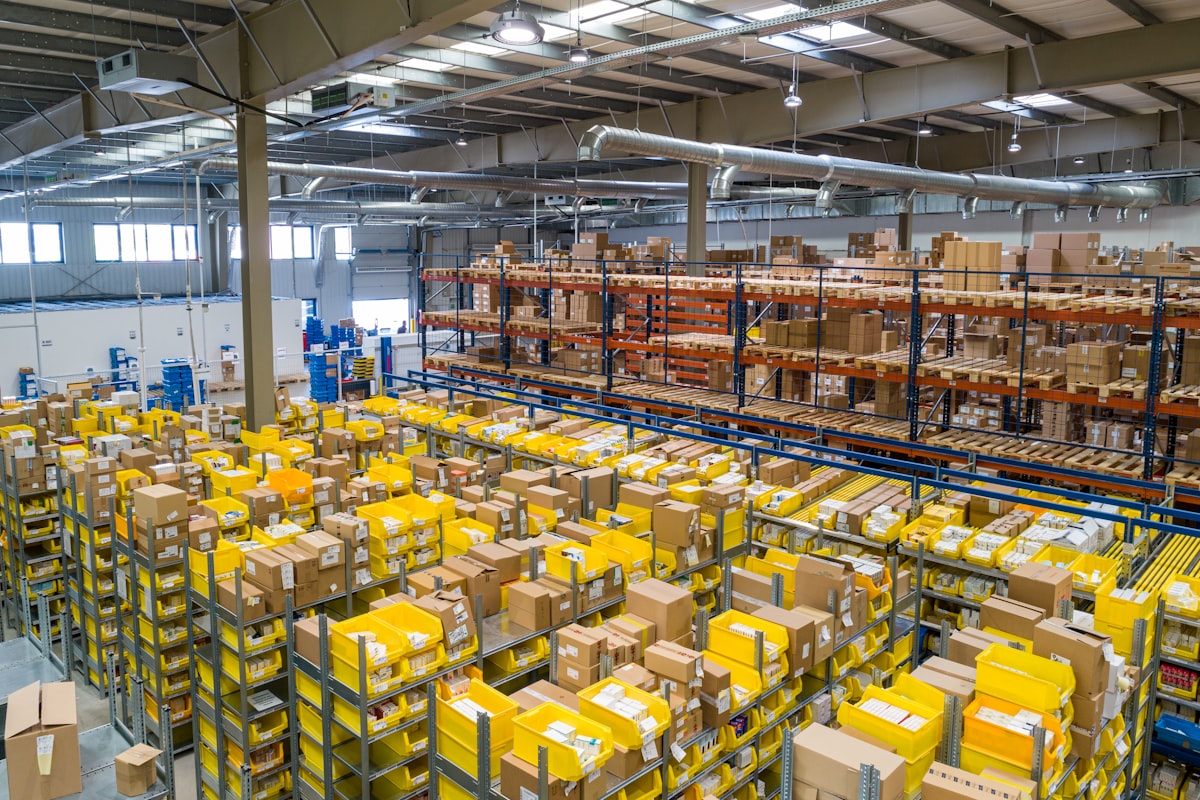
Wholesale distribution warehouse with supply chain boxes

What Is a Wholesale Account and How to Open One

Before a distributor will sell to you at wholesale pricing, you need what’s called a wholesale account — and opening one takes more than just asking. Here’s what a wholesale account actually is, what most distributors require before approving one, and what to expect once you’re in.

What a Wholesale Account Actually Gives You

A wholesale account is what unlocks bulk pricing and minimum-order-quantity purchasing from a distributor, instead of paying retail one unit at a time. It’s typically gated behind an application, not open checkout, because a distributor needs to confirm you’re a legitimate reseller buying for resale — not an individual consumer — before extending business pricing and terms.

What You Need Before You Apply

Requirements vary by distributor, but a few show up consistently across wholesale suppliers:

  • A registered business: an LLC, DBA, or other formal business registration, plus an EIN (free from the IRS) — most distributors won’t extend wholesale pricing to an unregistered individual.
  • A resale certificate: the document that lets you buy inventory tax-exempt for resale. See our full guide to resale certificates for what’s required state by state.
  • An active selling presence: an Amazon, eBay, Walmart, or other storefront URL that shows you’re actually operating as a reseller, not just planning to.
  • A real business address: most distributors won’t ship wholesale orders to a PO box, even for a home-based or online-only reseller.

Trade references (other suppliers you’ve bought from) sometimes come up, but they’re typically only relevant once you’re seeking Net terms later, not for a first application — a new business can generally apply without any purchase history yet.

What Happens After You Apply

Approval is usually quick once your documentation is in order, often within a day or two. Your first order is typically expected to be paid upfront rather than on Net terms — see our guide to wholesale payment terms for why that’s standard, not a red flag, for a brand-new account. Better terms generally open up once you’ve placed a few orders and paid on time.

Common First-Time Mistakes When Opening a Wholesale Account

  • Applying before your paperwork is ready: having your EIN, business registration, and resale certificate on hand before you apply speeds up approval significantly compared to scrambling to produce them mid-application.
  • Not confirming MOQ and pricing before committing: ask for the distributor’s minimum order quantity and per-unit pricing at that quantity before you get attached to a product line.
  • Skipping distributor verification: confirm you’re applying with a genuine, authorized distributor rather than an unverified reseller, before handing over business documentation.
  • Overbuying on the first order: a wholesale account doesn’t require you to place a maximum order right away — starting at or near the minimum lets you test a product before committing more capital.
✓ Verified Amazon Wholesale Supplier & Distributor

Wholesale Distributors US works with verified reseller businesses across the US — have your EIN, business registration, and resale certificate ready and apply for a wholesale account to see current pricing.

FAQ

What do I need to open a wholesale account?

Most distributors require a registered business (LLC or DBA) with an EIN, a resale certificate, an active selling presence like an Amazon or eBay storefront, and a real business address rather than a PO box.

How long does wholesale account approval take?

It varies by distributor, but approval is often granted within a day or two once your business documentation is complete and verifiable.

Do I need trade references to open a wholesale account?

Usually not for a first application. Trade references typically matter more once you’re seeking Net payment terms after establishing a purchase history, not for initial approval.

Will my first wholesale order require full payment upfront?

Usually, yes. New accounts typically start on prepayment since there’s no payment history yet, with better terms like Net 30 becoming available after a track record of on-time payments.

Related reading: Do You Need a Resale Certificate to Buy Wholesale? | Wholesale Purchasing Payment Terms | How to Verify an Authentic Wholesale Distributor | Minimum Order Quantity (MOQ) in Wholesale Purchasing

Apply for a Wholesale Account

Warehouse logistics team managing wholesale supply

How to Calculate Landed Cost for Wholesale Purchasing

The price per unit on a wholesale quote is never the real cost of that inventory. By the time a case of product actually lands in your warehouse or FBA-ready and ready to sell, freight, prep, and the cost of tying up cash have all added to it. Landed cost is the number that captures all of that — and it’s the number that should actually drive your pricing and purchasing decisions, not the unit price on the invoice.

What Landed Cost Actually Means

Landed cost is the total cost of getting a unit of inventory from your supplier to a sellable, in-stock position — not just the purchase price. For a domestic wholesale buyer sourcing from a US-based distributor, the core formula is simpler than the customs-and-duties version aimed at overseas importers:

Landed cost = Product cost + Freight/shipping + Prep & fulfillment fees + Cost of capital

If you’re importing directly from an overseas manufacturer rather than buying from a domestic distributor, customs duties, tariffs, and broker fees get added on top of this — which is one more reason a verified domestic distributor is often the simpler math for a buyer who isn’t already set up for import logistics.

Freight and Shipping

This is usually the largest add-on after product cost itself. Freight cost for wholesale purchasing depends on shipment weight and mode (LTL vs. FTL), freight class, and accessorial fees like liftgate or residential delivery — all of which need to be divided across the units in the shipment to get a true per-unit freight cost, not left as a lump sum you forget to account for.

Prep and Fulfillment Fees

If you’re selling on Amazon FBA, prep costs (labeling, poly-bagging, bundling where required) and inbound placement fees are real per-unit costs that a sticker price never reflects. Even outside FBA, warehousing or 3PL handling fees before a unit is sellable belong in the same bucket — they’re part of what it actually costs to get that unit ready to sell, not overhead you can ignore when comparing suppliers.

The Cost of Capital: The Landed-Cost Component Buyers Skip

This is the piece most new buyers miss entirely. If a supplier requires full prepayment and it takes six to eight weeks to sell through an order, that cash is tied up and unavailable for anything else during that window — a real cost, even if no line item on an invoice names it. A buyer comparing two suppliers purely on per-unit price, without factoring in how long each one ties up cash before it converts back to revenue, is comparing an incomplete number.

A Simple Worked Example

These figures are illustrative only, to show the mechanics — not a real product’s actual costs. Say a case pack costs $10/unit at the supplier’s quoted price. Freight works out to $0.60/unit once divided across the shipment. FBA prep and labeling add another $0.40/unit. On paper, that’s an $11/unit landed cost before you’ve even accounted for the weeks that cash sits in inventory before selling through — which is exactly the gap between the $10 sticker price and what the order actually costs you to execute.

Why This Matters for Bulk Purchasing Decisions

A bigger case pack or a higher minimum order quantity can lower per-unit product cost through the same freight-consolidation mechanics that make bulk purchasing cheaper — but it also ties up more capital for longer, which raises the cost-of-capital side of the equation. The right order size is the one where landed cost per unit is lowest overall, not just where the quoted price per unit looks smallest. This same landed-cost math is also what should sit underneath any startup capital budget — budgeting off the quoted unit price alone consistently underestimates what a first order actually requires.

✓ Verified Amazon Wholesale Supplier & Distributor

Wholesale Distributors US provides clear, itemized invoices so you can calculate your real landed cost with confidence — apply for a wholesale account to see current pricing.

FAQ

What is landed cost in wholesale purchasing?

Landed cost is the total cost of getting a unit of inventory to a sellable position, including the product cost, freight and shipping, prep and fulfillment fees, and the cost of capital tied up while it’s in transit or unsold — not just the price per unit quoted by the supplier.

Do I need to include customs duties in landed cost?

Only if you’re importing directly from an overseas manufacturer. If you’re buying from a domestic US wholesale distributor, duties and customs fees are typically already factored into the distributor’s pricing and don’t apply separately to your purchase.

Why does landed cost matter more than the quoted unit price?

Two suppliers can quote the same per-unit price but have very different landed costs once freight, prep fees, and payment terms are factored in. Comparing landed cost rather than sticker price gives a more accurate picture of which order is actually more profitable.

How does order size affect landed cost?

A larger order can lower per-unit freight and product cost through volume discounts and freight consolidation, but it also ties up more capital for longer. The lowest true landed cost isn’t always the largest order size — it depends on how quickly that inventory sells through.

Related reading: Bulk Purchasing: Lower Your Unit Cost | Wholesale Purchasing Shipping Costs | Amazon FBA Wholesale Startup Costs | Wholesale Purchasing Payment Terms | Amazon FBA Tariffs 2026: Why Wholesale From a US Distributor Protects Your Margins | Wholesale Purchase Orders: What to Include Before You Place a Bulk Order | Wholesale Markup vs. Margin: How to Price for Resale Profit

Apply for a Wholesale Account

Distribution center worker managing bulk inventory

Authentic Distributor vs. Manufacturer Direct: Which to Buy From

Once a wholesale buyer has done a few orders through a distributor, a natural question comes up: why not just buy straight from the manufacturer and cut out the middleman? Sometimes that’s the right move. Often, for a new or growing Amazon reseller, it isn’t. Here’s what each option actually means, where a distributor still wins, and when buying direct can genuinely make sense.

What Each Option Actually Means

A manufacturer makes the product. A wholesale distributor buys in volume from one or more manufacturers, holds inventory, and resells in smaller quantities to businesses like resellers, retailers, and smaller distributors. Buying “direct” means placing your order with the manufacturer itself; buying wholesale through a distributor means placing it with that middle layer instead. Neither one is automatically the better source — the right choice depends on your order size, how established your account is, and how much of the logistics work you want to take on yourself.

Where a Distributor Wins for a New or Growing Buyer

  • Lower minimum order quantity: a distributor’s MOQ is typically far smaller than what a manufacturer will accept, since the distributor has already met the manufacturer’s own minimum and is reselling in smaller slices.
  • Faster fulfillment: distributors generally hold ready inventory, while manufacturers often build or release stock on their own production schedule, which can mean longer lead times.
  • Logistics and consolidation support: a distributor often ships from a domestic warehouse and can consolidate multiple product lines into one order, rather than you coordinating freight from a factory directly.
  • Easier authenticity verification: a verified, authentic distributor can typically produce a clean, itemized invoice from an established business relationship — useful documentation if you ever need to support an Amazon ungating or authenticity request.
  • More flexible payment terms as you build history: distributors that work with resellers regularly are generally more willing to extend better terms to a buyer with a track record than a manufacturer used to large B2B contracts is.

Where Buying Direct from a Manufacturer Can Make Sense

Buying direct tends to pay off once volume is genuinely large enough to justify it. The typical case is a buyer who can meet a manufacturer’s minimum order (often measured in pallets or full production runs, not cases), has the cash to pay for it upfront, and can absorb longer lead times without running out of stock in the meantime. At that volume, removing the distributor’s markup can meaningfully lower per-unit cost — similar to the mechanics behind why bulk purchasing lowers unit cost in the first place, just taken a step further up the supply chain.

The Risks of Going Direct That a Distributor Removes

Buying direct isn’t only about clearing a minimum order size. A few risks come up consistently in sourcing guidance for resellers considering the jump:

  • Longer, less predictable lead times: a manufacturer’s production schedule isn’t built around a single reseller’s restock needs, so delays can leave you out of stock while you wait.
  • Quality and communication friction: without a distributor acting as an intermediary who already has an established relationship with the factory, resolving a quality issue or a shipment discrepancy can take longer and involve more back-and-forth.
  • Fraud exposure with unfamiliar overseas manufacturers: a buyer sourcing “direct” from a manufacturer they’ve never worked with, especially internationally, takes on more of the verification burden themselves — there’s no distributor who has already vetted the relationship standing between you and the factory.
  • Larger cash commitment tied up longer: a bigger order combined with a longer production and shipping timeline means more capital sitting in transit or in a factory queue before it can be sold.

How to Decide

For most Amazon resellers still building volume, a verified distributor is the more practical source: lower MOQ, faster turnaround, and an invoice trail that supports account health. Buying direct becomes worth evaluating once your order size and cash position genuinely clear a manufacturer’s minimum — which connects back to the same startup and working capital planning that governs every other purchasing decision. Even then, it’s worth comparing the real landed cost, not just the sticker price, against what a distributor already offers before making the switch.

✓ Verified Amazon Wholesale Supplier & Distributor

Wholesale Distributors US gives resellers a verified distributor relationship with real invoices and manageable order minimums — apply for a wholesale account to see current pricing and quantities.

FAQ

Is it cheaper to buy direct from a manufacturer than from a distributor?

Only at high enough volume. A manufacturer’s minimum order is usually much larger than a distributor’s, and the per-unit savings from cutting out the distributor’s markup only outweigh the added lead time, risk, and capital commitment once your order size genuinely justifies it.

Why would a new Amazon reseller use a distributor instead of buying direct?

Lower minimum order quantities, faster fulfillment from existing inventory, and an established, verifiable invoice trail make a distributor more practical for a buyer who isn’t yet ordering at manufacturer-minimum volume.

What risks come with buying direct from a manufacturer?

Longer and less predictable lead times, more communication friction when resolving quality issues, greater fraud exposure with an unfamiliar manufacturer, and more capital tied up for longer in a single large order.

When should I consider switching from a distributor to buying direct?

Once your order volume reliably clears the manufacturer’s minimum order quantity and you have the capital and demand forecasting to absorb longer lead times without running out of stock, it’s worth comparing the real landed cost of both options.

Related reading: How to Verify an Authentic Wholesale Distributor | Minimum Order Quantity (MOQ) in Wholesale Purchasing | Bulk Purchasing: Lower Your Unit Cost | Amazon FBA Wholesale Startup Costs | Amazon FBA Tariffs 2026: Why Wholesale From a US Distributor Protects Your Margins

Apply for a Wholesale Account

Delivery truck loaded with wholesale shipment boxes

Freight & Shipping Costs in Wholesale Purchasing: What New Buyers Forget

Product cost and per-unit pricing get most of the attention in wholesale purchasing, but freight is often the line item that throws a first-time buyer’s budget off. Here’s what new buyers commonly forget to account for when it comes to shipping wholesale orders, and how to avoid the surprise charges that show up after the truck has already left.

LTL vs. FTL: Know Which One Your Order Needs

Most wholesale orders that don’t fill an entire trailer ship as LTL (less-than-truckload) freight, generally covering shipments in the roughly 150 to 15,000 pound range. You pay for the trailer space your pallets actually use while other shippers’ freight fills the rest. Once an order grows large enough to fill a trailer on its own, FTL (full-truckload) shipping usually becomes the more cost-efficient option, since you’re paying for the whole trailer instead of a per-pallet LTL rate.

Why Freight Class Affects Your Rate

LTL carriers price shipments using a freight class system based on density, stowability, handling difficulty, and liability risk. Two pallets that weigh the same can carry different freight classes – and different rates – if one is bulkier or harder to handle. Getting the dimensions and weight right when you book a shipment matters for more than just an accurate quote; it also helps you avoid the reweigh issue below.

The Accessorial Fees That Catch New Buyers Off Guard

Accessorial fees are add-on charges beyond the base freight rate, and they typically average around 5% of the total LTL rate – though for certain shipments they run meaningfully higher. The ones that trip up new wholesale buyers most often:

  • Liftgate service: required when your delivery location doesn’t have a loading dock and needs hydraulic lift assistance to unload pallets.
  • Residential delivery: a surcharge applied when the delivery address isn’t a commercial location.
  • Inside delivery: moving freight beyond the curb or dock into an actual interior space costs extra.
  • Detention/delay fees: charged when a truck sits waiting to load or unload beyond the carrier’s free time allowance.
  • Fuel and peak-season surcharges: fuel surcharges shift with diesel prices, and carriers often add peak-season surcharges during high-demand months.

Exact dollar amounts vary by carrier, lane, and season, so treat any specific accessorial fee you’re quoted as specific to that shipment – not a fixed industry rate. The fix is simple: tell your freight quote provider exactly what kind of location you’re shipping to (dock vs. no dock, commercial vs. residential) before you book, not after the truck shows up.

The Hidden Cost Most New Buyers Miss: Reweigh and Reclassification

Carriers routinely re-measure and re-weigh LTL shipments at their terminals. If the actual weight or dimensions don’t match what was booked, the carrier issues a correction – and a corrected freight class almost always means a higher bill than the original quote. This is widely considered one of the most frequent sources of unexpected freight charges for shippers who don’t measure carefully before booking. Weighing and measuring your own pallets accurately before requesting a quote is the most direct way to avoid getting hit with a reweigh correction later.

Why This Matters for Your Bulk Purchasing Math

Freight consolidation is one of the real mechanics behind how bulk purchasing lowers your per-unit cost – but that math only holds up if you’re also accounting for accessorials and potential reweigh corrections, not just the base freight quote. When you’re building out your total startup budget, build in a buffer for freight beyond the quoted base rate rather than assuming the first number you’re given is the final one.

✓ Verified Amazon Wholesale Supplier & Distributor

Wholesale Distributors US ships FBA-ready case packs with clear, upfront shipping details for verified reseller accounts – apply for a wholesale account to see current shipping terms.

FAQ

What is LTL freight shipping?

LTL (less-than-truckload) shipping is used when a shipment doesn’t need a full trailer, generally in the roughly 150 to 15,000 pound range. You pay for the space your freight uses while other shippers’ freight fills the rest of the trailer.

What’s the difference between LTL and FTL shipping?

LTL shares trailer space across multiple shippers’ freight, while FTL (full-truckload) dedicates an entire trailer to one shipment. FTL generally becomes more cost-efficient once an order is large enough to fill a trailer on its own.

What are accessorial fees in freight shipping?

Accessorial fees are add-on charges beyond the base freight rate, such as liftgate service, residential delivery, inside delivery, and detention fees. They typically average around 5% of the total LTL rate but can run higher for certain shipments.

Why did my freight bill come back higher than the quote?

Carriers often re-weigh and re-measure shipments at their terminals. If the actual weight or dimensions differ from what was booked, the carrier issues a correction, which usually raises the final bill above the original quote – one of the most common sources of unexpected freight charges.

Related reading: Bulk Purchasing: Lower Your Unit Cost | Amazon FBA Wholesale Startup Costs | Wholesale Purchasing Mistakes New Resellers Make | Minimum Order Quantity (MOQ) in Wholesale Purchasing | How to Calculate Landed Cost for Wholesale Purchasing | Wholesale Supplier Lead Times: What to Expect | Wholesale Backorders and Partial Shipments: What to Know Before You Order

Apply for a Wholesale Account

Truck delivering wholesale packages to warehouse

Minimum Order Quantity (MOQ) in Wholesale Purchasing: What to Expect

Every wholesale supplier sets a minimum order quantity, or MOQ — the smallest amount of a product you’re allowed to buy in a single order. For a new reseller comparing distributors, MOQ can matter just as much as price per unit, since it decides how much cash you need on hand before a supplier will sell to you at all. Here’s what MOQ actually is, why distributors set it where they do, and what you can realistically do if a supplier’s minimum is more than you want to commit to on a first order.

What MOQ Actually Means

MOQ is simply the smallest quantity a supplier is willing to sell per order — not per product line, but per order placed. If a distributor’s MOQ is 50 units, an order for 30 units generally won’t be accepted, regardless of how much you’d be willing to pay per unit above list price.

Why Distributors Set a Minimum in the First Place

MOQs exist because processing and fulfilling a small order can cost a distributor close to what a large order costs, without the revenue to justify it. The reasoning shows up consistently across supplier-side sourcing guides:

  • Covering fixed costs: production, packaging, and shipping costs need to be covered before an order is profitable for the supplier to fulfill at all.
  • Economies of scale: average cost per unit drops as order volume rises, which is the same mechanic that makes bulk purchasing lower your landed cost per unit — a supplier’s MOQ is often set at the volume where that math starts working in their favor too.
  • Passed-down manufacturer minimums: a distributor often has its own minimum order requirement from the manufacturer it buys from, and passes a version of that minimum down the chain to its own buyers.
  • Cash flow and inventory holding costs: a supplier warehousing inventory for very small, frequent orders ties up capital and space without a proportional payoff.

There’s no single formula suppliers use — MOQ varies supplier to supplier based on their own production costs, holding costs, and pricing strategy, which is why the same product can carry very different minimums from two different distributors.

What This Means for Your First Wholesale Order

A high MOQ interacts directly with how much starting capital you need. If a supplier’s minimum is 200 units at $8 per unit, that’s a $1,600 commitment before shipping, prep, or marketplace fees — regardless of whether your overall startup budget was built around a smaller test order. It’s worth asking a distributor for their MOQ and per-unit pricing at that MOQ before you get attached to a product, so you can budget against the real number rather than an assumption.

Can You Negotiate a Lower MOQ?

Sometimes, though it’s not guaranteed. A few approaches that come up consistently in sourcing guidance for new buyers:

  • Ask directly, and ask early: some suppliers have flexibility they simply don’t advertise, especially for a buyer who signals intent to reorder regularly.
  • Offer to pay a premium per unit for a smaller quantity: a supplier who won’t budge on quantity may accept a higher per-unit price instead, since that addresses the same cost-coverage concern the MOQ exists to solve.
  • Build the relationship first with a smaller, compliant order where possible: distributors are generally more willing to flex on quantity for a buyer who has already placed at least one order and paid on time — the same track-record dynamic covered in our guide to wholesale payment terms.
  • Compare multiple distributors: MOQ for the same product can differ meaningfully between suppliers, so it’s worth checking more than one verified, authentic distributor rather than assuming the first quote you get is the only option.

What generally doesn’t work as a shortcut: dropshipping instead of wholesale purchasing removes the MOQ problem entirely, since a dropship supplier ships only what actually sells — but that comes with its own trade-offs in margin and control that are outside the scope of MOQ itself.

MOQ Is One Line Item, Not the Whole Picture

A low MOQ is only a good deal if the supplier behind it is legitimate and the per-unit economics still work once you run the numbers — see how bulk purchasing actually lowers per-unit cost before assuming a bigger order is automatically the better one, and confirm supplier authenticity before committing to any order size.

✓ Verified Amazon Wholesale Supplier & Distributor

Wholesale Distributors US offers clear, published order quantities and per-unit pricing for verified reseller accounts — apply for a wholesale account to see current minimums.

FAQ

What does MOQ mean in wholesale purchasing?

MOQ stands for minimum order quantity — the smallest number of units a supplier requires you to buy in a single order. It’s set per order, not per product line, and varies by supplier.

Why do wholesale suppliers require a minimum order quantity?

MOQs let a supplier cover fixed production, packaging, and shipping costs, benefit from economies of scale, and pass along minimums their own manufacturers may require of them. Without a minimum, small orders can cost more to fulfill than they earn.

Can I negotiate a lower MOQ with a wholesale distributor?

Sometimes. Asking directly, offering a higher per-unit price for a smaller quantity, or building a track record with a smaller compliant first order can open flexibility, though it isn’t guaranteed and depends on the individual supplier.

Does dropshipping avoid the MOQ problem?

Yes — a dropshipping supplier ships only what actually sells, so there’s no minimum order quantity to meet. That removes the MOQ issue but comes with its own trade-offs in margin and inventory control compared to wholesale purchasing.

Related reading: Bulk Purchasing: Lower Your Unit Cost | Amazon FBA Wholesale Startup Costs | How to Verify an Authentic Wholesale Distributor | Wholesale Purchasing Payment Terms | Freight & Shipping Costs in Wholesale Purchasing | Authentic Distributor vs. Manufacturer Direct | What Is a Wholesale Account and How to Open One | How to Negotiate Wholesale Pricing Without Burning the Relationship | Case Pack vs. Pallet: Which Wholesale Buying Format Is Right for You

Apply for a Wholesale Account

E-commerce seller reviewing sales analytics on laptop

Wholesale Purchasing Payment Terms: What to Expect

When you’re ready to start wholesale purchasing, the payment terms a distributor offers can matter as much as the price per unit — they decide how much of your own cash gets tied up in each order, and for how long. Here’s what payment terms actually look like in wholesale purchasing, and what to realistically expect as a new buyer.

The Common Payment Terms in Wholesale Purchasing

A few structures show up repeatedly across wholesale suppliers:

  • Prepayment (CIA – Cash in Advance): Full payment before the order ships. The most common starting point for a brand-new buyer.
  • Deposit + balance: Part of the cost up front, the remainder due on or before delivery — common for larger first orders.
  • Net 30 / Net 60 / Net 90: Payment due a set number of days after the invoice date. Net 30 is the most widely used version in B2B wholesale generally.
  • COD (Cash on Delivery): Payment collected at delivery — less common today than it used to be.

Why New Buyers Almost Always Start With Prepayment

If a distributor asks a first-time buyer to pay upfront or put down a deposit rather than offering Net 30 immediately, that’s standard practice, not a red flag. A new account has no order or payment history yet, so there’s no data for a supplier to extend credit against. This applies broadly across wholesale distribution, not just to smaller or newer suppliers.

How to Earn Better Terms Over Time

Buyers who move from prepayment to Net terms generally get there the same way: starting with a modest first order to establish a track record, paying on time (or early) consistently, and communicating proactively if a payment will be late rather than going quiet. Order size and product quality aren’t usually what separates a buyer stuck on prepayment from one offered Net 60 — payment behavior over time is.

What This Means for Your Bulk Purchasing Plans

If you’re planning a large first order, budget as though full prepayment will be required — because it likely will be. This connects directly to how much startup capital you actually need: your first wholesale order needs to be sized to what you can pay upfront, not to what a bulk purchasing discount alone would justify. As your account matures and better payment terms become available, that’s when scaling up order size gets easier to finance.

A Payment-Terms Red Flag Worth Knowing

Standard payment methods for a legitimate wholesale distributor are traceable — company bank transfer, ACH, or a business credit card, tied to an invoice with the supplier’s real business information. A supplier who insists on personal payment apps, cryptocurrency, or wire transfers to an individual’s name rather than a registered business account is a warning sign worth pairing with the checks in our guide to verifying an authentic wholesale distributor.

✓ Verified Amazon Wholesale Supplier & Distributor

Wholesale Distributors US works with verified reseller businesses on clear, traceable payment terms from a real US business account — no surprises when you place your first order.

FAQ

Will I get Net 30 terms on my first wholesale order?

Usually not. Most distributors start new buyers on prepayment or a deposit and extend Net terms once a payment history is established, since there’s no track record to base credit on yet.

What’s the most common wholesale payment term?

Net 30 is the most widely used term in B2B wholesale generally, meaning payment is due 30 days after the invoice date, but it’s typically offered to established accounts rather than first-time buyers.

How do I qualify for better payment terms over time?

Start with a modest first order, pay on time or early consistently, and communicate proactively if a payment might be delayed. Payment behavior over time is generally what earns better terms, not order size alone.

Is it normal to pay 100% upfront for a first wholesale order?

Yes, this is standard practice for new buyer accounts and isn’t a sign of a problem with the supplier. It becomes worth extra caution only if the requested payment method itself is untraceable, like a personal payment app or wire to an individual rather than a business account.

Related reading: How to Verify an Authentic Wholesale Distributor | Amazon FBA Wholesale Startup Costs | Bulk Purchasing: Lower Your Unit Cost | Wholesale Purchasing Mistakes New Resellers Make | Minimum Order Quantity (MOQ) in Wholesale Purchasing | How to Calculate Landed Cost for Wholesale Purchasing | What Is a Wholesale Account and How to Open One | Wholesale Distributor Scams: Red Flags to Watch For | How to Negotiate Wholesale Pricing Without Burning the Relationship | Amazon’s New Business Hour Delivery Rate: What Wholesale Resellers Need to Know | Amazon’s August 2026 Business Solutions Agreement Change: What It Means If You Finance Wholesale Inventory

Apply for a Wholesale Account

Amazon seller working on laptop with sales charts

Do You Need a Resale Certificate to Buy Wholesale?

If you’re getting ready to buy inventory in bulk from an authentic distributor — to resell on Amazon, eBay, Walmart, or your own store — one of the first questions that comes up is whether you need a resale certificate before a supplier will sell to you. Short answer: in most cases, yes, and it also saves you money. Here’s what it actually is, why wholesale distributors ask for it, and how to get one.

What a Resale Certificate Actually Is

A resale certificate (also called a reseller’s permit, seller’s permit, or sales tax exemption certificate depending on the state) is a document that lets a registered business buy inventory tax-free, as long as that inventory is being bought to resell — not for personal or internal business use. Instead of paying sales tax on every wholesale order and hoping to recover it later, you show the certificate at time of purchase and the supplier doesn’t charge sales tax on that order. The end customer pays sales tax when the product is finally sold at retail, which is how it’s supposed to work under most state sales tax rules.

For a reseller placing recurring wholesale orders, this adds up. On a few thousand dollars of monthly inventory, skipping sales tax on every order is a meaningful ongoing saving compared to paying tax on stock that hasn’t sold yet.

Why Wholesale Suppliers and Distributors Ask For One

This ties directly into supplier verification (see our guide to spotting an authentic distributor vs. a gray-market reseller) — a legitimate wholesale distributor is generally required to either collect sales tax or keep a valid resale certificate on file to justify not collecting it. That means when a real distributor asks for your resale certificate (or EIN and business info) before opening a wholesale account, that’s a normal, expected part of doing business correctly — not an extra hoop. It’s actually a good sign: a supplier who doesn’t care about tax documentation at all is often not registered and compliant themselves.

What You Typically Need to Get One

Requirements vary by state, but generally you’ll need:

  • A registered business (sole proprietorship, LLC, or corporation)
  • An EIN (Employer Identification Number) from the IRS, or in some states a Social Security Number for a sole proprietor
  • Your business’s legal name and address
  • Registration with your state’s Department of Revenue (or equivalent) for a sales tax permit, which is usually the step that produces your resale certificate

Five states — Alaska, Delaware, Montana, New Hampshire, and Oregon — don’t have a statewide sales tax, so a resale certificate generally isn’t part of doing business in those states. Everywhere else, requirements and exact paperwork differ state to state, and some states have stricter rules about accepting a certificate issued by a different state. If you’re sourcing across state lines, the safest move is to confirm directly with your own state’s Department of Revenue (or a tax professional) exactly what’s required before you rely on it — state tax rules change and this guide isn’t tax or legal advice.

Resale Certificate vs. EIN vs. Business License — They’re Not the Same Thing

These three get confused a lot:

  • EIN — your federal tax ID number, issued by the IRS. It identifies your business for tax purposes but by itself doesn’t exempt you from sales tax.
  • Business license — permission from your city/county/state to operate a business at all. Not every state or city requires one to buy wholesale.
  • Resale certificate — the document specifically tied to sales tax exemption on inventory bought for resale. This is the one a wholesale supplier is usually asking about.

Some distributors will accept just an EIN plus basic business information to open a wholesale account, especially if they collect sales tax on your orders directly and let you handle the resale/exemption side yourself. Others require the resale certificate up front. Either way, having your EIN, business registration, and (if you have one) resale certificate ready before you apply speeds up approval.

Getting Ready to Apply for a Wholesale Account

Before applying for a wholesale account with any distributor — including our own wholesale application — it’s worth having this documentation on hand: your EIN, basic business details, and your resale certificate or sales tax permit number if your state issues one. It’s the same documentation Amazon, eBay, and Walmart increasingly expect resellers to be able to produce when authenticity or sourcing is questioned (see our guide to what each marketplace expects), so getting it in order now saves time later.

✓ Verified Amazon Wholesale Supplier & Distributor

Wholesale Distributors US works with verified reseller businesses across the US — have your EIN and resale certificate ready when you apply for a wholesale account.

FAQ

Do I need a resale certificate to buy wholesale?

In most states, yes — if you want to buy inventory tax-free for resale, a supplier will generally ask for a valid resale certificate or equivalent sales tax exemption documentation. Some distributors will still open an account without one and simply charge sales tax on your orders.

Is a resale certificate the same as a business license?

No. A business license gives you permission to operate; a resale certificate is specifically about sales tax exemption on goods bought for resale. You may need one, both, or neither depending on your state and business structure.

Can I use one state’s resale certificate to buy from a supplier in another state?

Sometimes, but not always — some states have stricter rules about out-of-state certificates. Check with your state’s Department of Revenue or a tax professional before assuming an out-of-state certificate will be accepted.

Do all states require a resale certificate?

No — five states (Alaska, Delaware, Montana, New Hampshire, and Oregon) don’t have a statewide sales tax, so the concept generally doesn’t apply there. Every other state has its own registration process.

Related reading: How to Verify an Authentic Wholesale Distributor | Wholesale Purchasing for Amazon, eBay & Walmart Resellers | Amazon FBA Wholesale Business Model Guide | Bulk Purchasing: Lower Your Unit Cost | What Is a Wholesale Account and How to Open One | Do You Need Product Liability Insurance to Sell Wholesale on Amazon? | Sales Tax Nexus for Wholesale Resellers: What Multi-State Selling Means for You | The INFORM Consumers Act: High-Volume Seller Guide | 1099-K Reporting Threshold for 2026: What Wholesale Resellers Need to Know

Apply for a Wholesale Account

Warehouse logistics team managing wholesale supply

Wholesale Purchasing Mistakes New Amazon Resellers Make

Most wholesale purchasing mistakes aren’t about picking the wrong product — they’re about skipping a step in the sourcing process that only becomes a problem after you’ve already committed real money to inventory. Here are the mistakes that trip up first-time Amazon resellers most often, and how to avoid each one.

1. Skipping Supplier Verification

Buying from the first supplier who offers the lowest price, without checking whether they’re a genuine, authorized distributor or an unverified middleman, is the single costliest mistake on this list — because it puts every other purchase at risk. See our guide to verifying an authentic wholesale distributor before placing a first order with anyone new.

2. Accepting a Receipt Instead of a Real Invoice

A retail receipt and a proper wholesale invoice are not interchangeable, even when they come from the same order. If your paperwork doesn’t hold up to Amazon’s actual requirements, it won’t protect you when it matters. Our invoice vs. receipt breakdown covers exactly what to check for.

3. Ignoring the Real Math Behind Bulk Purchasing

Buying bigger case packs feels like an obvious win, but the actual per-unit savings come from specific mechanics — freight consolidation and fixed costs spread over more units — not just a lower sticker price. See how bulk purchasing actually lowers your cost before assuming bigger is always better.

4. Not Checking Category or Brand Gating First

Placing a bulk order before confirming whether the category or brand is gated on Amazon — and what invoice details you’ll need to get ungated — can leave you holding inventory you can’t list yet. Check our ungating guide by category before you buy, not after.

5. Buying Past Your FBA Capacity or IPI Limit

A great bulk purchasing deal doesn’t help if you can’t actually ship it into FBA because you’ve hit your storage capacity or IPI threshold. Restocking decisions need to account for IPI score and current FBA capacity limits, not just how much cash you have available.

6. Underestimating Total Startup Capital

New resellers often budget for inventory alone and forget the rest — shipping, prep, Amazon fees, and the cash buffer needed while you wait to sell through your first batch. Our startup capital guide breaks down a more realistic total.

7. Assuming One Supplier Relationship Covers Every Marketplace the Same Way

Amazon, eBay, and Walmart each verify authenticity differently, and treating them identically can catch you off guard. See what each marketplace actually expects from a wholesale buyer before assuming your paperwork automatically covers all three.

8. Not Planning for Buy Box Competition

On shared listings, multiple sellers compete for Buy Box time, and inventory depth is one of the factors that affects your share. First-time resellers sometimes buy just enough to test a product, then can’t compete once demand picks up. See our guide to winning the Buy Box as a wholesale reseller for how this plays into your purchasing decisions.

✓ Verified Amazon Wholesale Supplier & Distributor

Wholesale Distributors US works with resellers to avoid exactly these mistakes — real invoices, clear case-pack pricing, and a verified US business behind every order.

FAQ

What’s the most common wholesale purchasing mistake new resellers make?

Skipping supplier verification. Buying from an unverified source puts every other part of the process at risk, since a bad invoice or inauthentic product can undermine an otherwise solid purchasing plan.

Is a receipt good enough proof of purchase for Amazon?

Not always. Amazon’s ungating and inauthentic-complaint processes generally look for a complete, itemized invoice with specific business and product details, which a simple retail receipt often doesn’t include.

Should I buy the biggest case pack size available to save money?

Not automatically. Bulk purchasing lowers per-unit cost through specific mechanics like freight consolidation, but it also ties up more capital and storage capacity, so the right order size depends on your own cash flow and FBA limits.

Related reading: Amazon FBA Wholesale Business Model Guide | How to Vet an Amazon FBA Wholesale Supplier | How to Verify an Authentic Wholesale Distributor | Bulk Purchasing: Lower Your Unit Cost | Wholesale Purchasing Payment Terms: What to Expect | Freight & Shipping Costs in Wholesale Purchasing

Apply for a Wholesale Account

Wholesale distribution warehouse with supply chain boxes

Wholesale Purchasing for Amazon, eBay & Walmart Resellers

Wholesale purchasing isn’t just an Amazon FBA strategy — resellers on eBay and Walmart Marketplace buy in bulk from distributors too, and each platform has its own take on how it verifies that inventory is genuine. If you sell across more than one marketplace, it’s worth understanding what each one actually expects from a wholesale buyer before you scale up your purchasing.

The Common Thread: Proving Where Your Inventory Came From

Every major marketplace has the same underlying concern: is this seller’s inventory genuine, and can they prove it if a customer or brand complains? How each platform enforces that varies, but a real, itemized invoice from an authentic wholesale distributor is the foundation that satisfies all three.

Amazon

Amazon’s approach centers on category and brand gating, plus its inauthentic-complaint process. Sellers may need to submit a supplier invoice to get ungated in restricted categories, and if a brand or customer files an inauthentic complaint, that same kind of invoice is often what protects the listing. See our guides on ungating by category and protecting against inauthentic complaints for the specifics.

eBay

eBay runs a separate program called Authenticity Guarantee for certain high-value categories (historically things like trading cards, sneakers, handbags, watches, and jewelry — check eBay’s current category list, since it can change). For eligible listings, participation is automatic: when an item sells, eBay generates a shipping label that routes the item to a third-party authenticator before it ever reaches the buyer. As a seller, you don’t submit paperwork for this step — the physical item itself gets inspected. Outside of Authenticity Guarantee categories, eBay’s general seller policies still expect you to be able to demonstrate legitimate sourcing if a complaint is filed.

Walmart Marketplace

Walmart’s approval process is more focused on business legitimacy upfront: sellers need a registered US business entity (a Social Security Number alone isn’t accepted — you need a US Tax ID/EIN), a verified US business address and bank account, and GS1-verified UPC or GTIN codes on every product listed. A track record selling successfully on other marketplaces can help during approval. Walmart doesn’t publicly detail a standard wholesale-invoice submission process the way Amazon does for ungating, but keeping the same real, itemized invoices on file is still the safest practice if a sourcing question ever comes up.

Why One Verified Supplier Simplifies All Three

Sourcing the same products from a single verified, authentic wholesale distributor means you’re building one clean paper trail that works across every marketplace you sell on, instead of piecing together different receipts from different sources for each platform. It also means your bulk purchasing volume goes further, since you’re not duplicating sourcing effort per channel.

✓ Verified Amazon Wholesale Supplier & Distributor

Wholesale Distributors US supplies verified resellers across Amazon, eBay, and Walmart with the same real, itemized invoice on every order — one supplier relationship for every channel you sell on.

FAQ

Do I need a different invoice for Amazon vs. eBay vs. Walmart?

No — a complete, itemized invoice from a genuine wholesale distributor works as your proof of sourcing across all three marketplaces. Each platform enforces authenticity differently, but the underlying paper trail you need is the same.

What is eBay’s Authenticity Guarantee?

It’s a program that automatically applies to listings in certain high-value categories. When an eligible item sells, eBay routes it through a third-party authenticator before it reaches the buyer, at no cost to the seller. It’s category-specific, so check eBay’s current list to see if it applies to what you sell.

Does Walmart Marketplace require a wholesale invoice to get approved?

Walmart’s public application requirements focus on business registration (a US Tax ID/EIN, not just a Social Security Number), a verified address and bank account, and GS1-verified product identifiers. It doesn’t publicly detail a standard wholesale-invoice submission process the way Amazon does, but keeping real invoices on file is still good practice.

Does buying from one distributor work for multiple marketplaces?

Yes — sourcing the same products from one verified, authentic distributor gives you a consistent paper trail and simplifies compliance across every marketplace you sell on, rather than managing different suppliers per channel.

Related reading: How to Verify an Authentic Wholesale Distributor | Protecting Against Amazon Inauthentic Complaints | Invoice vs. Receipt for Amazon Ungating | Bulk Purchasing: Lower Your Unit Cost | Wholesale Purchasing Mistakes New Resellers Make | Do You Need a Resale Certificate to Buy Wholesale? | Sales Tax Nexus for Wholesale Resellers: What Multi-State Selling Means for You | eBay’s 2026 User Agreement Changes: What Sellers Need to Know

Apply for a Wholesale Account

Distribution center worker managing bulk inventory

Bulk Purchasing for Amazon FBA: Lower Your Unit Cost

“Buy wholesale” and “buy in bulk” get used interchangeably, but the actual cost savings from bulk purchasing come from a few specific mechanics — case pack sizing, freight consolidation, and fixed costs spread across more units. Understanding those mechanics is what separates a reseller who’s actually lowering their landed cost per unit from one who’s just tying up more cash in inventory.

Here’s how bulk purchasing actually reduces cost for an Amazon FBA reseller, and where the trade-offs are.

What a “Case Pack” Actually Is

A case pack is a sealed box of identical units of one product, packed by the manufacturer or distributor to be opened and sold individually — not a bundle. Amazon’s own FBA packaging guidelines set real limits on these: boxes generally need to stay within specific per-side dimension and weight limits, and every unit inside still needs its own scannable label. Case pack sizes and exact limits can change, so always check your current Seller Central packaging requirements before you place a shipment-bound order — this is one detail worth confirming with Amazon directly rather than relying on any single outside guide.

Where the Per-Unit Savings Actually Come From

1. Fixed Costs Get Spread Over More Units

A chunk of what goes into your landed cost per unit isn’t proportional to order size — customs brokerage fees, quality inspection fees, and other per-shipment costs are largely fixed whether you order 100 units or 1,000. Order more in a single shipment and that same fixed cost gets divided across more units, pulling your per-unit landed cost down. This is the core mechanical reason bulk purchasing works, independent of any per-unit discount your supplier offers.

2. Case-Pack Freight Consolidation

Shipping full, uniform case packs — rather than loose or mixed units — lets freight get palletized more efficiently, which industry freight-forwarder data points to as a meaningful reducer of per-unit freight cost compared to smaller, mixed shipments. The exact percentage varies by carrier, lane, and season, so treat any specific number you see quoted as a ballpark, not a guarantee for your own shipment.

3. Supplier Pricing Tiers

Beyond freight and fixed-cost math, many wholesale suppliers also offer lower per-unit pricing at higher order quantities — a straightforward volume discount on top of the logistics savings above. Ask any supplier for their quantity price breaks in writing before you order; a legitimate wholesale distributor should have these ready to share.

The Trade-Off: Capital and Storage

Bulk purchasing isn’t free money — it means more cash tied up in inventory before you’ve sold a single unit, and more warehouse or FBA storage capacity consumed. If you’re restocking close to your FBA capacity limit or IPI threshold, a large bulk order can push you over it. The right order size balances the per-unit savings above against how much capital and storage space you can actually commit — see our startup capital guide for how much cash a wholesale FBA business typically needs to hold in inventory at once.

Why the Source Matters as Much as the Quantity

Bulk purchasing only pays off if what you’re buying in bulk is genuine, sellable stock with a real invoice behind it. A large order from an unverified source multiplies your risk right along with your savings — see our guide on verifying an authentic wholesale distributor before you commit to a bigger order size.

✓ Verified Amazon Wholesale Supplier & Distributor

Wholesale Distributors US offers case-pack quantities with clear pricing for verified resellers — apply for a wholesale account to see current quantity pricing.

FAQ

Does bulk purchasing always lower my per-unit cost?

Generally yes on the logistics and fixed-cost side, since freight and per-shipment fees get spread across more units. Whether it’s the right move for your business also depends on your available capital and FBA storage capacity, not just the per-unit price.

What is a case pack in Amazon FBA?

A case pack is a sealed box containing multiple identical units of one product, packed together for shipment and then split apart for individual sale at Amazon’s fulfillment centers. Amazon sets specific size, weight, and labeling requirements for these boxes, so check your current Seller Central guidelines before shipping.

Is buying the largest case pack size always the best choice?

Not necessarily. Larger orders lower your per-unit landed cost but tie up more capital and storage capacity. It’s worth balancing the savings against your available cash flow and how close you are to any FBA capacity or IPI limits.

Should I ask my wholesale supplier for quantity pricing tiers?

Yes. A legitimate wholesale distributor should be able to share written pricing at different order quantities so you can calculate your actual landed cost per unit before committing to a larger order.

Related reading: Amazon FBA Wholesale Startup Costs | Amazon IPI Score & FBA Capacity Limits | How to Verify an Authentic Wholesale Distributor | Amazon FBA Wholesale Business Model Guide | Wholesale Purchasing for Amazon, eBay & Walmart Resellers | Wholesale Purchasing Mistakes New Resellers Make | Do You Need a Resale Certificate to Buy Wholesale? | Wholesale Purchasing Payment Terms: What to Expect | Minimum Order Quantity (MOQ) in Wholesale Purchasing | Freight & Shipping Costs in Wholesale Purchasing | Authentic Distributor vs. Manufacturer Direct | How to Calculate Landed Cost for Wholesale Purchasing | How to Negotiate Wholesale Pricing Without Burning the Relationship | Case Pack vs. Pallet: Which Wholesale Buying Format Is Right for You | Wholesale Supplier Lead Times: What to Expect | Wholesale Markup vs. Margin: How to Price for Resale Profit

Apply for a Wholesale Account